Brussels Philharmonic, Kazushi Ono & Abel Selaocoe
Coincident Dances
Where Is Home?
Coming home in music
A man steps onto the stage, cello in hand. He looks out into the concert hall, spreads his arms and says, ‘Welcome. Tonight, you are not listeners, but participants. Our meeting is an exchange.’ Then he begins to sing and play, and everything becomes clear. He absorbs the audience’s energy like a human antenna and returns it tenfold. The concert hall shifts into an intimate living room. Everyone who witnessed it walks away transformed.
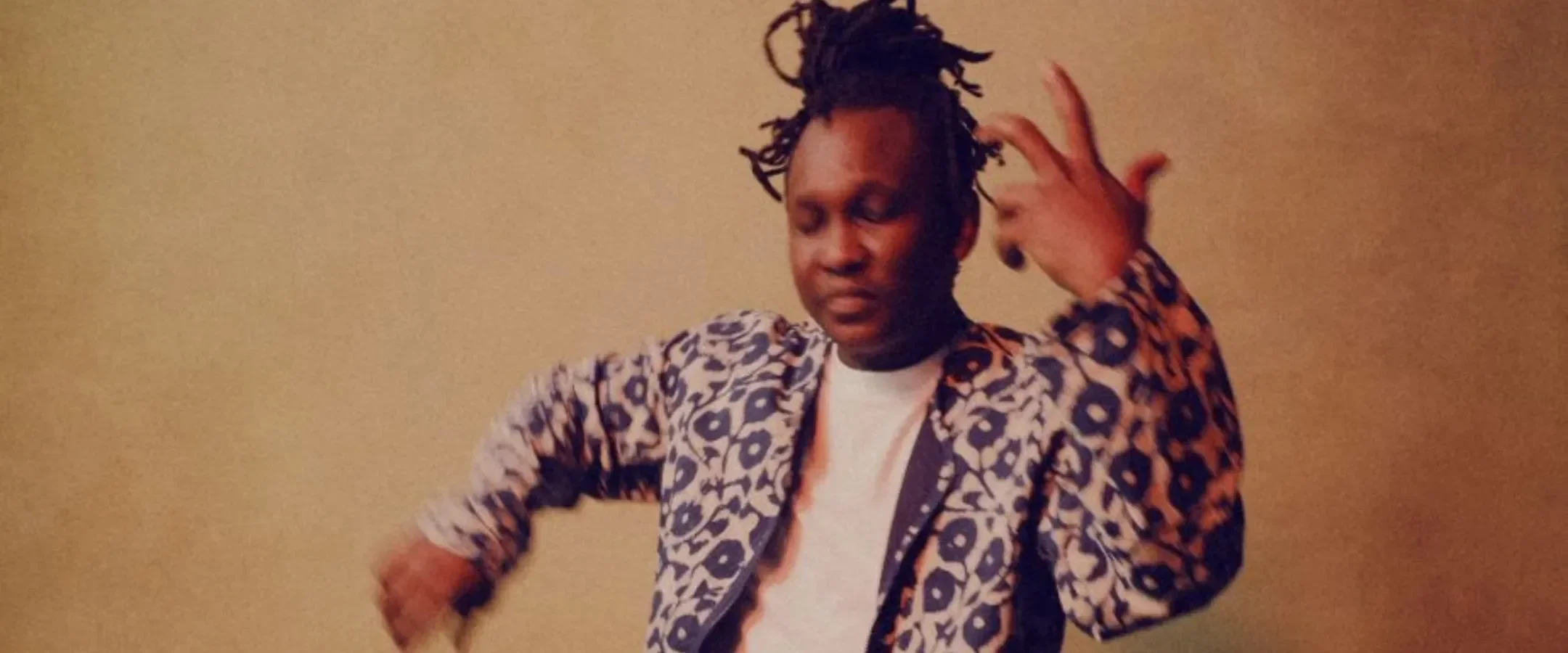
This is essentially how a concert by Abel Selaocoe unfolds. Together with this charismatic cellist, singer and composer, we warmly welcome you to the 21st Klarafestival. As a festival artist, Selaocoe will play three concerts spanning the full spectrum of his musical world. From traditional music from his native South Africa to baroque, jazz, contemporary classical and improvisation: he melds all these influences into a unique body of work, centred on identity and cultural exchange.
The theme of this year's festival is taken from the debut album of Selaocoe’s own Bantu Ensemble: Where Is Home? It is an open question with endless answers – especially in the super-diverse city of Brussels, home to 180 nationalities and 100 languages. Our capital is a crossroads, a refuge, a temporary or permanent home for countless individuals, each carrying their own story. Every day, we feel privileged that our festival can take root in such fertile soil.
Klarafestival 2026 is an ode to the city we call home. During Muziekberg/Mont des Musiques, Brussels musicians will take over the Kunstberg (Mont des Arts) for a day, from the Musical Instruments Museum to Bozar, from the Ravenstein Gallery to the Royal Museums of Fine Arts. And both Radio Lomax and the choir Les Invisibles (La Voix des Femmes Sans Papiers) will perform Brussels songs with diverse roots.
Our mission is to show as wide an audience as possible that classical music is alive and kicking. Even the most familiar works take on fresh life in the hands of the adventurous musicians we surround ourselves with. Prepare to be captivated by Bach's St John Passion as conducted by Maxim Emelyanychev. Marvel at Beethoven and Strauss with the Orchestre Philharmonique du Luxembourg. Rediscover Chopin and Scriabin in a performance by Alexandre Kantorow. Or encounter keyboard phenomenon Anthony Romaniuk: like Abel Selaocoe, he intertwines his own compositions with the established repertoire, from Bach to Björk.
This festival programme features many more musical kindred spirits. Annelies Van Parys completed the 8th symphony of her former teacher Luc Brewaeys. Pianists Kris Defoort and Stephane Ginsburgh pay tribute to their friend Philippe Boesmans, who would have turned 90 in 2026. Abel Selaocoe, in turn, improvises with like-minded souls, both old and new, and performs a brand-new cello concerto by American composer Jessie Montgomery.
None of this would be possible without the support of our partners in Brussels and beyond. Bozar, Flagey, De Munt, Ancienne Belgique, Brussels Philharmonic, Belgian National Orchestra, Passa Porta, BNA-BBOT and the Luc Brewaeys Foundation all contribute to Klarafestival’s unique DNA. Our indispensable private partners include KPMG Belgium, Proximus, Brugse Zot, Gimv/WorxInvest and Interparking. We are grateful for the support of the Flemish Community, the Flemish Community Commission, the Brussels-Capital Region and the National Lottery. Our collaboration with VRT and Klara, meanwhile, is the secret to our success as a broadcasting festival. Above all, we thank our enthusiastic audience who follow us both in the concert hall and at home on the radio and VRT MAX.
For Abel Selaocoe, ‘home’ is much more than a building or a place. 'It can be a spiritual space. It can be people. (...) It can be something you find along your travels.’ For seven years, Klarafestival has been ‘home’ for festival director Joost Fonteyne. His sense of adventure and social connection is more evident than ever in this festival programme. In April 2026, he will continue his journey and pass the torch to Jan Van den Borre. Many thanks, Joost, for the wonderful years!
The Klarafestival Team
Joost Fonteyne, intendant
Jan Raes, chairman
Chantal Pattyn, network manager Klara
Brussels Philharmonic – orchestra
Kazushi Ono – musical direction
Abel Selaocoe – cello
Marta Fontanals-Simmons – mezzo-soprano
Coproduction: Flagey, Klarafestival, Brussels Philharmonic
Florence Price (1887-1953)
Ethiopia’s Shadow in America
- Introduction and Allegretto: The Arrival of the Negro in America when first brought here as a slave
- Andante: His Resignation and Faith
- Allegro: His Adaptation, a fusion of his native and acquired impulses
Carlos Simon (1986)
Songs of Separation
- I. The Garden
- II. Burning Hell
- IV. We Are All the Same
Leonard Bernstein (1918-1990)
West Side Story: Symphonic Dances
- Prologue
- Somewhere
- Scherzo
- Mambo
- Cha-Cha
- Meeting Scene
- Cool
- Rumble
- Finale
interval
Jessie Montgomery (1981)
These Righteous Paths: Cello Concerto (Belgian premiere)
- All the Ancestors and I
- Another Train Poem: Part 1, Georgia and the Foreman; Part 2, Up South
- A New Song
Coincident Dances
Music that brings many stories to life
If it were up to Carlos Simon – at just forty years of age, the youngest composer on the bill – this introduction wouldn’t really be necessary. Simon doesn’t like to lead the listener by the hand. What makes music so fascinating, he believes, is precisely that everyone can recognise something of themselves in it. The compositions in this programme are also rooted in the unique experiences and backgrounds of their creators. All four grew up on American soil, without ever forgetting their ancestry elsewhere. Together, their works form a vibrant palette of styles and stories, rooted in the African-American diaspora and often distinctly personal. Yet, time and again, they are surprisingly universal…
These programme notes are therefore primarily intended as a guidebook, not a set of directions. For every listener will experience this musical journey differently – and that begins with the baggage you (unconsciously) carry with you. The diversity of backgrounds and experiences that equally characterises the audience is a richness cherished by Abel Selaocoe. In this programme, Klarafestival 2026’s featured guest artist may well be in the spotlight as a soloist, but that does not mean he forgets the audience in the darkness around him. On the contrary, for Selaocoe, every concert is an exchange: he is just as curious about the story you hear in this music as he is about the story he himself wishes to convey through it.
Florence Price — Ethiopia's Shadow in America (1932)
The story of Florence Price has been told often over the last decade. Price grew up in the America of the first half of the 20th century, a country ravaged by ever-increasing segregation. After a lifetime of battling racism and sexism, her exceptional musical legacy seemed to have been quickly forgotten. Until 2009, when a treasure trove of original scores by her hand was suddenly discovered in a dilapidated house near Chicago. This led to a veritable revival, so that today Price is known to the general public as so much more than simply the first black woman whose work was performed by a professional American orchestra – albeit a special honour bestowed upon her first symphony in 1933.
In those same years, Price composed Ethiopia’s Shadow in America, the only work in her oeuvre to be given an explicit programme. The three movements sketch the journey – or rather, the uprooting – of African people who were brought to America as slaves. The expansive first movement depicts their arrival, with an orchestral colouring that gives voice to the mysterious allure but also the disorientation of a new world. In contrast, Price employs a strikingly austere harmonic language in the second movement, in which the strings take centre stage. With warm, subdued melodies, they give voice to the inner force field in which faith offers both comfort and a strategy for survival. The final movement is an explosion of the will to live, with rhythm as a ‘compelling, onward-sweeping force that tolerates no interruption’, in Price’s own words. Thus, in Ethiopia’s Shadow in America, the composer manages to translate the diaspora experience into music in a striking way: not through literal quotations, but through rhythmic energy and the use of colour.
Carlos Simon – Songs of Separation (2023)
Following the colourful splendour and rhythmic drive of Price, Carlos Simon’s Songs of Separation mark a return to the inner self. Simon wrote this song cycle at the start of this decade, when the coronavirus pandemic had suddenly knocked the world off course and brought it to a standstill. The loneliness and loss with which the pandemic confronted many of us set the composer thinking. For however painful, it was precisely these feelings that brought us closer together as human beings. Simon also found this insight in Jalāl al-Dīn Rumi, the 13th-century Sufi poet for whom saying goodbye did not signify an end, but a gateway to insight.
Each of the three Songs of Separation selected for this programme combines the poetry of Rumi with a musical language that is deliberately expressive and direct. The warm, expansive melodic lines of the mezzo-soprano (a part performed here by Marta Fontanals-Simmons) are supported by a transparent orchestration, which subtly fills in the picture rather than taking the brush into its own hands. Gradually, the orchestral colours shift from dark to light, from mourning to embrace. Together, the four movements form an arc that culminates in the realisation that ‘what hurts you, also blesses you.’ This is not merely a poetic notion, but a musical principle: dissonances open up into more harmonious chords, closed sound fields break open into movement, and ultimately, the work culminates in an introspective yet deeply convincing message of hope.
Leonard Bernstein – West Side Story: Symphonic Dances (1960)
One composer who, already decades earlier, held a firm belief in the richness of a multi-layered and diverse culture was Leonard Bernstein. Like no other, Bernstein knew how to bring together the most diverse styles and thus shape a new American musical identity. He did so in Symphonic Dances, a suite in which he transformed the music of West Side Story into a concert work. The dances carry us into a sonic world where lyricism, rhythmic ostinatos, jazz influences, Latin idioms and classical structures constantly intersect and sometimes get in each other’s way. This music is so vibrant that the energy and narrative of Bernstein’s hit musical remain intact even without words. The rousing cadence of the mambo, the soaring lyricism of ‘Somewhere’, the percussive bursts of sound and the clashing yet ever-dancing rhythms: in the Symphonic Dances, the New York of the 1950s immediately comes back to life. Bernstein’s polyglot idiom thus heralded a new phase in American symphonic music, one that found its distinctiveness precisely in the intersection and fusion of styles.
Jessie Montgomery - Coincident Dances (2017)
Whereas Bernstein portrayed New York from a 20th-century perspective, Jessie Montgomery presents the city as it sounds today: layered, hectic and resolutely multilingual. This characterises Montgomery: as a 21st-century composer, her work is radically rooted in today’s world. Not only does she navigate effortlessly between the most diverse cultures in her musical language (something she learned at a young age by embracing both her Ghanaian roots and her classical violin training). It is also often what is happening in our contemporary world that drives her to compose. Many of her compositions, for instance, draw inspiration from the fight against social inequality. This has earned Montgomery worldwide acclaim for her social engagement, and of course musical recognition too – the latter even in the form of the music award par excellence: a Grammy.
Coincident Dances is Montgomery’s musical city walk. On even the shortest stroll through her hometown of New York, you hear sounds coexisting and intertwining simultaneously: samba rhythms alongside techno beats, swing over African percussion, electronic pulses beneath classical melodies… Montgomery composes these clashes not as a collage, but as a tapestry of sound layers that enter into dialogue with one another. The orchestra becomes a kind of DJ pult: mixing rhythms, articulating tensions and building an energy that is constantly in motion. Coincident Dances is the diaspora in real time – not as a memory, but as a daily experience.
Jessie Montgomery - These Righteous Paths (2026)
Montgomery’s latest work is a cello concerto, written for and in close dialogue with Abel Selaocoe. Whilst composing These Righteous Paths, the composer went through a period of deep mourning following the death of her mother, theatre maker Robbie McCauley. Her commitment to the Black Theatre movement had always been a great inspiration to Montgomery, but in the years following her death, the composer felt more inspired than ever by her mother’s texts: texts that simultaneously revealed her own threads in the web of history and formed a way to give new meaning to the future.
The composer explicitly draws on the Ghanaian concept of ‘sankofa’: moving forward requires the courage to look to the past. Musically, this results in a layered language in which African rhythms, Baroque clarity, jazz harmony and improvisational freedom subtly intertwine and enrich one another. Montgomery’s own diaspora experience intertwines with that of Selaocoe – two musical paths which, though different, nevertheless resonate with one another. The solo part is symbiotic with the orchestra, navigating between different roles. At times the cellist is a rhythmic driving force, at others an improvising narrator, but always in dialogue. These Righteous Paths regards history not as a burden, but as a source of movement. It is music that unfolds towards the future, whilst remaining deeply anchored in memory.
This programme brings together composers and performers who, each in their own way, ask what it means to carry one’s past into the present, and to shape one’s identity in a state of perpetual motion. Their compositions are not linear narratives, but worlds in which tradition, memory and renewal engage in dialogue with one another time and again. And it is precisely there that they invite us to participate in that conversation ourselves: first and foremost by listening, but also by contributing to the narrative in our own way.
Pauline Driesen
Translation: Catherine Grady
Composer’s note
Jessie Montgomery – These Righteous Paths for cello soloist and orchestra
- 1. All the Ancestors and I
- 2. Another Train Poem: Part 1, Georgia and the Foreman; Part 2, Up South
- 3. A New Song
This piece represents part of a series of works that are inspired by the plays and poems of my late mother, Robbie McCauley, a leading figure in the Black theater movement in post-Civil Rights era America, who passed away in 2021. As I have navigated my own grief in the past 5 years since her passing, I find myself absorbed by the sentiments in her words, comforted and inspired by them, and realizing the inherent music within them. Reflecting inheritances from the African diaspora and its influence on the Black American experience, it is from these ancestral traces that I shape a living soundscape, one that honors what has been passed down while allowing the music to conjure new hopes and memories. I am inspired by the Sankofa image, a Ghanaian concept and symbol that describes the way we must look back in order to go forward. The figure is depicted by a bird with its head tilted backward, as if calling to the past for confirmation to take flight. Thusly, there are extended passages that are inspired by the cascade and cadence of birds in flight.
This collaboration with Abel Selaocoe represents a journey through worlds past and present, and is just as much inspired by the poems as it is by his unique palette of cellistic and vocal capabilities. The orchestration traverses many stylistic influences that I associate with Abel’s voice—baroque continuo, song-writing, Afro-centric rhythms and melodies, virtuoso classical performance, and improvisation, to name a few. The form struggles to be contained yet relaxes into grooves and sometimes uncannily familiar melodies. While writing, I often found myself asking, “Have I written this before?” Sometimes I think it is simply confirmation from past lives, ancestral nudges forward, as if to say: “Yes, we are here. Keep going. You must keep going.”
“All the ancestors and I” – Robbie McCauley
For Rhea Lore Greta & Zake
I don’t believe
in heaven and hell
I do accept beliefs
Of whoever holds them
I do stay in touch
With family and friends
no longer alive on earth
I imagine them all in heaven.
'Another Train Poem' – Robbie McCauley
Back when going South on the train,
when so many black children from New York Philadelphia Delaware Baltimore and D.C.,
with trains officially segregated
all the way Upsouth, our caretakers had boarded us safely in the Colored cars —(despite Steven Spielberg’s faux vision of The Color Purple train) and how we were under cover taken care of by A Philip Randolph’s powerfully unionized Negro train workers, we had no idea we were in the midst
at the core as usual of positive change in this slow country.
An Autumn 2017 magazine
Alex Hoyt feature— reminds me of all the back and forth train stories from us to us - - from working with Chinese and Irish who were welcome immigrants and us ex-slaves. Us too yes working ‘all the livelong day’
moving on up, in motion
moving through hanging on
long and sturdy sometimes
falling by the wayside
in this slow country
that believes so much
in speed.
Title? – Robbie McCauley
I want a new song
Beautifully sung
About something more
Not all the songs before
Lost love and closing doors
Not the same old rhymes
Same old times
of death and war.
A new new new song
is what I’m longing for.
Brussels Philharmonic
The current Brussels Philharmonic was founded in 1935 as the symphony orchestra of the Belgian public broadcaster and has been an independent institution since 1998. The orchestra is based at Flagey and has been led since 2022 by music director Kazushi Ono, with whom it shares the mission of bringing both the symphonic repertoire and contemporary music to a wide audience. In addition, the Brussels Philharmonic has a penchant for film music: it has recorded several soundtracks and even won an Oscar in 2012 for the music for The Artist. Outside Flanders and Brussels, the orchestra has performed at international venues such as Carnegie Hall New York, Philharmonie de Paris, Wiener Musikverein and Großes Festspielhaus Salzburg.
Kazushi Ono
Kazushi Ono's musical personality is a blend of the culture of his native Japan and the European influences he absorbed as a student. This combination is reflected in his versatile repertoire, which ranges from Baroque to contemporary creations and from orchestral music to opera. Ono has worked in opera houses and concert halls all over the world and has held important artistic positions at La Monnaie, Opéra national de Lyon and Orquestra Simfónica de Barcelona, among others. Since 2022, he has been music director of the Brussels Philharmonic, as well as artistic director of the New National Theatre Tokyo and music director of the Tokyo Metropolitan Symphony Orchestra.
Abel Selaocoe
South African cellist, singer and composer Abel Selaocoe is one of the most important voices in the music world today. Freely interweaving and redefining repertoires, he effortlessly meanders between styles and genres, in programmes that connect Western and non-Western musical traditions. In doing so, he combines his virtuosity on the cello with improvisation, singing and body percussion. His open-minded spirit has led to collaborations with numerous musicians from different genres, including Bernhard Schimpelsberger, Seckou Keita, Giovanni Sollima and Dudù Kouaté. Selaocoe is the founder of the trio Chesaba, which focuses on African music, and the Bantu Ensemble, with which Selaocoe uniquely brings together African and classical influences.
Jessie Montgomery
The American composer, violinist and educator Jessie Montgomery weaves together classical music with folk traditions, improvisation, poetry and social awareness. In her work, she seeks to capture a wide range of human experience by engaging with themes such as social justice and the diasporic experience of African Americans. She has written works on commission from organisations including the Nashville Ballet, City Ballet, The Metropolitan Opera, New York Philharmonic and the Chicago Symphony Orchestra, where she served as composer-in-residence for three years. In 2025, the radio programme Performance Today named Montgomery Classical Woman of the Year.
Structural partners
Klara, KPMG
Event partners
Brouwerij Halve Maan, Gimv | Worxinvest, Interparking, Proximus
Cultural partners
Ancienne Belgique, Belgian National Orchestra, Bozar, Brussels Philharmonic, De Munt | La Monnaie, Flagey, Muntpunt, Museum of Musical Instruments, Passa Porta
Public funding
Nationale Bank, Nationale Loterij meer dan spelen, Stad Brussel, Visit Brussels, Vlaamse Gemeenschap
Media partners
BRUZZ, De Standaard, La Première, La Trois, Le Soir, Musiq3, Radio 1, Ring TV, VRT Eén, VRT Canvas, VRT Max
Festival suppliers
Daniel Ost, Drukkerij VD, Maison Dandoy