ars subtilior meets jazz
interview with bassist, keyboard player and composer Lennart Heyndels
For Codex Au Soleil, the Lennart Heyndels Quartet explores 14th century songs for the listener and then, employing jazz tones and improvisation, reconstructs them in the moment. Lennart Heyndels tells us how they tackled this adventure.
Lennart, Codex au Soleil is clearly a long-term project.
That’s right. The project was already started up at the height of the coronavirus pandemic. We were able to do a week in residence at DE SINGEL twice, and there were several months in between. You usually dive into a project for a much shorter time, but this in-between period allowed us to let the project ripen and to explore it in greater depth. The second week in residence is completed and it’s great to see how the music has grown in relation to my initial idea. After the premiere we’ll be recording the album and we’ll release it in spring 2023 with an accompanying tour.
So your performance is part of the release tour?
That’s right. We’re really looking forward to going on tour with it and are very excited to see how the audience reacts. It’s best to approach it with an open mind, but if not, I think you at least have an open mind when you leave.
Codex au Soleil takes medieval music as its starting point, especially the Ars Subtilior. Is that a personal fascination for you?
Yes, the so-called ‘more subtle art’ of the Middle Ages does indeed fascinate me. This predominately French, 14th-century music style has an enormous rhythmic complexity. You notice from everything that the musicians or composers simply wanted to try out all sorts of things. If you look at the scores of the Chantilly Codex (the most important surviving source, ed.), you immediately see how complex this is. Yet it is not at all highbrow or learned. There is always a certain kind of playfulness to it. The great thing about this music is that it’s already quite experimental in itself. Some ideas in the music are so crazy that they’re almost impossible to play: for example, let’s suddenly do this in three different tempi simultaneously! From this music, the step to a contemporary interpretation is also a very logical one. Everything is possible: we’ve added electronica, and improvisation is allowed. In this way you get to places where you’ve never been before as a musician. It’s endlessly fascinating and enriching!
So it’s in no way a historical interpretation of this medieval work?
Not at all. It’s not our intention to be historically accurate. Other people are much better at that. Our goal is to show the relevance of this music and to make a link with the music of today. If you merely consider that the period of the Ars Subtilior is before Bach’s Das Wohltemperierte Klavier (here ‘well-tempered refers to a tuning that made it possible to play reasonably in tune in all keys), then you know there are gigantic gaps in your knowledge. You don’t know exactly how the instruments were tuned in the 14th century. So if you play medieval music today, it’s always going to be a contemporary interpretation. For us, the Ars Subtilior is an invitation to seek out the boundaries of the music.
You invited three other musicians to tackle this bold project with you.
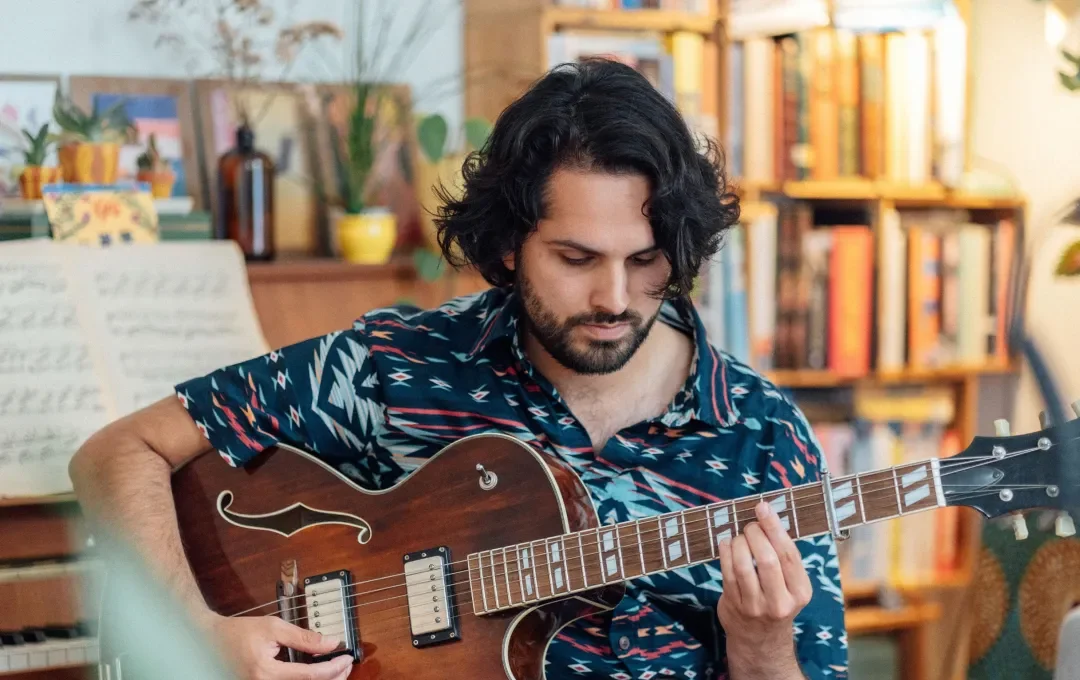
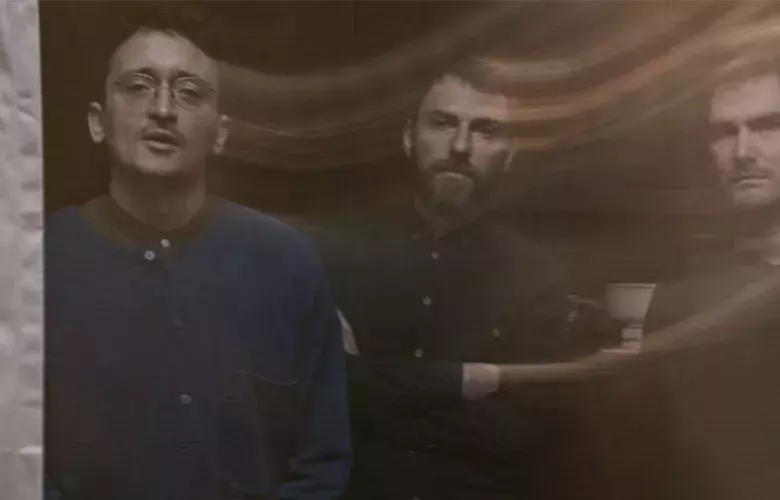
It became a quartet. I put the group together, specifically for this project. I myself have had a jazz training and I play double bass and modular synth. Stijn Cools plays drums. I had only played a few times with Stijn, mainly as a replacement in other bands, but it was enough for me to become seriously impressed by his musicality. I regularly played with George Dimitriu in the Kaja Draksler Octet, and I play with Joachim Badenhorst in his own project Zero Years Kid. This is the first time that we are coming together in this formation.
I found it interesting to see what we would do with the fundamental idea of early music in this line-up. That was the starting point. A challenging leap into the unknown. The initial plan was simply to play this predominately vocal music with an unusual instrumentation. We then used recordings of this to makes samples from, which we transform and weave into other electronic sounds and acoustic improvisations. Ultimately it’s become a very beautiful mix and I can’t wait to play it for an audience!
So is it mainly your project, Lennart, or more something that you’ve created together?
Codex au Soleil has largely been created collectively. I did start things off with arrangements and small melodic compositions that serve as a starting point. The most important thing for me during the creation process was to find a way of playing that allows improvisation with this musical material. In this way we can put our own personality into it, and that gives us the space to make every concert different. Ultimately we sound best when we are able to improvise.
Where does the name Codex au Soleil come from?
The idea is that we put early manuscripts, early codices, in the sunlight. We want to take this relatively unknown music, even to an audience of connoisseurs, out of the dungeons of the history books. We do play music that is hundreds of years old, but by combining it with the music of tomorrow, we link the future to the past.
interview by Renate Coen on behalf of CC Strombeek