The sound of home
In conversation with Liesbeth Decrock
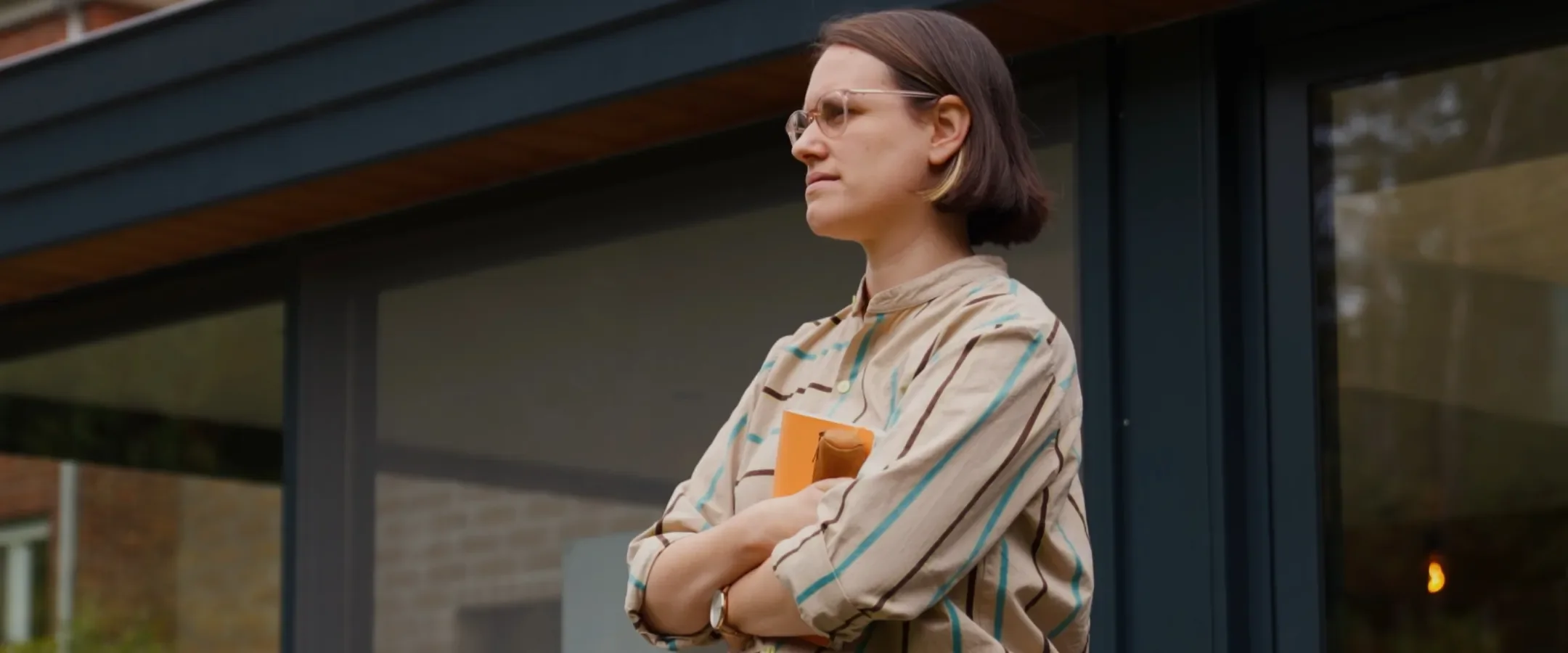
Anyone surveying the work of composer Liesbeth Decrock will immediately notice her partiality for unusual arrangements and playful, sometimes mildly ironic titles. Behind this idiosyncratic façade lies a composer with a warm and sensitive take on the world. This combination makes her the ideal person for the project Klarafestival takes care of you.
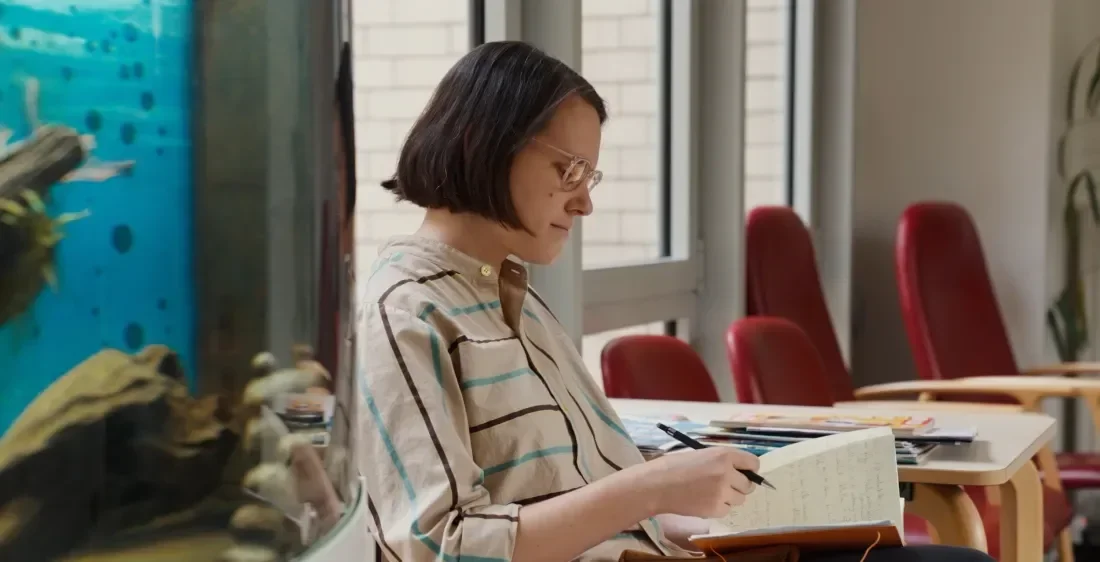
Liesbeth spent a week staying in the care home De Overbron in Neder-over-Heembeek, where she immersed herself in the daily life of residents. She experienced at close range what it means to make a new home of a place that is not entirely your own, and listened to residents’ stories. She incorporated all these impressions into a composition that will be performed this autumn during a tour with the Effel Quartet of several Brussels care homes.
How was your week?
It was certainly an intense and impactful experience. A care home is a world in itself, with its own rhythm and expectations. So it took time for me to work out how to relate to it, and what I needed myself in order to function and to compose. But after a few days, things began to settle into a rhythm.
How different was it for you to compose in this place?
I managed to recreate my usual composition setting pretty successfully in the room in which I was staying, with my own piano, a small keyboard and my laptop. So that felt quite familiar. I did notice that I was less able to concentrate sustainedly than at home. To be able to compose, I must be able to feel truly alone and to shut out the outside world. That proved to be a challenge here. What helped was to introduce structure into my days. In the morning I mostly took part in a group activity and I was able to cautiously start connecting with the residents. In the afternoon, I withdrew in order to process the impressions and to write a little. In the evenings I ate with the residents and hung around for a while in the corridor between the two buildings, which proved to be an ideal way to build up a connection with a number of residents. Thanks to the muffled sounds coming from the various rooms, and of the kitchen team who were clearing up, there was also a very homely atmosphere there.
During the conversations with residents, do you remember any particular stories that touched or inspired you?
One theme that I often return to in my work is that of a ‘home’. A care home seemed to me the ideal place to talk about that. During the conversations, I soon noticed that this was a very sensitive topic for many of the residents. One lady kept a very close hold of her room key. It was important to her that her room was always locked, so that strangers could not simply walk in. Another resident reported that it was easier to feel at home here if you had lived locally all your life. I hadn’t actually considered that yet: that whatever is outside your room or house also helps determine whether a place feels familiar. What also struck me is that everyone creates a new place to call home in a different way. Often it is small things that make the difference, such as photos or paintings that residents bring with them from their old home, things that have been with them their whole lives. Or the music that they used to listen to.
Can music help you to feel at home in a strange place?
For me personally, a house is a place where you are safe. Music plays an important role in that. I always have earphones with me. If I feel the need to withdraw for a while, then I know that I can put them on and listen to the music I’m familiar with, or to a peaceful soundscape. That also helps me to be alone in a crowded place and to relocate the sense of home within myself. It is a safe place that I always carry with me.
How do you conjure up that feeling of home in the music you are composing?
Musically, I sought out how ‘home’ sounds for me, and what emerged were full-toned and inviting sounds. I think that each of us in our own way is searching for something basal; something warm and soft that embraces you. And something that can offer solace if you experience homesickness. Over the past week, I have tried to translate all that into a harmonic framework for the composition. I am also very happy to have the opportunity to write for a saxophone quartet: the warm timbre of the saxophone chimes wonderfully well with the sweet sounds that I want to conjure up.
Interview by Aurélie Walschaert