As part of Klarafestival 2022, French soprano Sabine Devieilhe will take us on a journey through Benjamin Britten’s song cycle, Les Illuminations, with the Bayerisches Staatsorchester. To find out more about her affinity with Britten’s work, a repertoire in which we haven’t heard her much, we asked her a few questions.
It’s not the first time you come to Brussels. You’ve sung in several operas and recitals at La Monnaie (including Eurydice in Gluck’s Orpheus and Eurydice, and the Queen of the Night in Mozart’s The Magic Flute), as well as at Bozar. What’s your impression of cultural life in Belgium, and in Brussels in particular?
“That’s not all: I made my professional debut some ten years ago at the Klarafestival in Belgium, with Les Ambassadeurs. I was a very young singer, and Alexis Kossenko had asked me to put together a programme around Rameau, and to perform Beethoven’s Scottish Songs with Alain Buet, in a small chamber ensemble. So, I’m familiar with the festival and its unique vibrancy. It has a taste for musical curiosities, and the audience is really present, even for performances that might be less mainstream than the rest of the programme. I’m delighted to be back singing in such a wonderful setting.”
For your concert at this year’s Klarafestival, you’ll be working with the Bayerisches Staatsorchester. Is it the first time you perform together?
“No, it’ll be the second. The first time was in the middle of the pandemic for a production of The Magic Flute, which somehow survived the storm. I know them from the orchestra pit, in conditions that were far from perfect for meeting musicians. It was in autumn 2020, in a production where all my interactions with my colleagues on the set, and obviously with the members of the orchestra, were cut off to avoid contagion, even though we were tested regularly. For the upcoming performance of the Illuminations, with its chamber orchestral texture, I will finally have the chance to meet the solo musicians.”
How did they come to you?
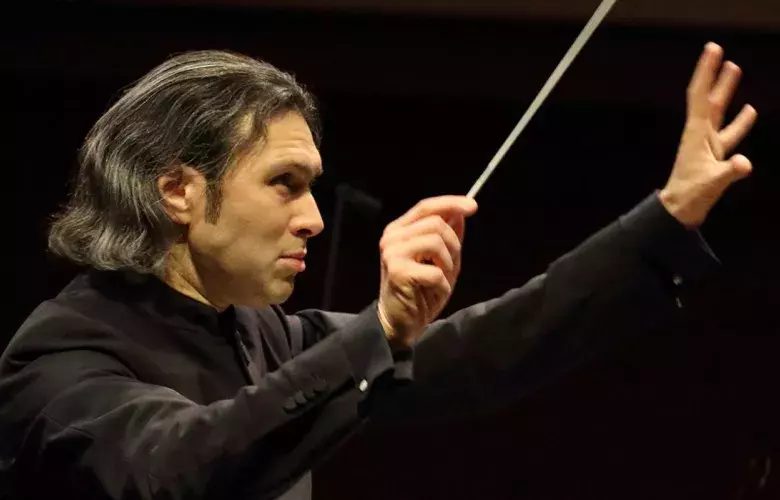
“I’d already performed Benjamin Britten’s Illuminations with the Rundfunkorchester Berlin and Vladimir Jurowski. He was the one to suggest performing it again with his own orchestra, the Bayerisches Staatsorchester in Munich.”
There seems to be a long way between early 20th century French repertoire, for which you are perhaps best known, and that of Britten. Did you already have an affinity with Britten’s music, for example through the texts of Maeterlinck – one of the great symbolists alongside Rimbaud – whom you know from your role as Mélisande in Debussy’s Pelléas et Mélisande?
“What I find very moving in Les Illuminations is to feel the incredibly close relationship between Rimbaud and Britten. I knew something of Britten because I sang the young Lucia in his Rape of Lucretia when I was a student. I fell in love with the music and the character, who is simply radiant. Britten has a way of orchestrating with light and shadows. And for the soprano in particular, he has a predilection for a texture that is highly ethereal and sparkling. In Les Illuminations, the almost magical aspect is also there; it goes really well with Rimbaud’s poetry, and manages to depict the unconscious. You really feel the poetry’s modernity, its clear path towards depictions of the unconscious and the premises of psychoanalysis. It’s a wonderful territory to explore.”
Does Britten’s way of composing lead you to use your voice differently?
“It’s different, of course, but in the end, it’s all about theatre. Vladimir Jurowski makes a point of interpreting Les Illuminations in a very theatrical way. In this context, in a recital with orchestra, I alone recite the text. You have to hear the colours and the declamation of Rimbaud, even if it’s in a language that’s foreign to the audience. The role of the narrator has even been compared to that of a circus ringmaster, who presents the show. The first poems are almost like a fanfare: the lines are very declamatory and ‘recto tono’, on a single note. It’s a very particular way to project your voice, and unusual for me because the texture of my voice is rather light. You have to work like a chameleon, but I find it wonderful. In twenty minutes, I can declaim, but at the same time produce the ethereal texture I was talking about. There’s also a ‘serenade’ aspect to the fourth piece: the orchestra accompanies me in pizzicato, a bit like a guitar - it makes me think of Don Giovanni singing beneath the window. Les Illuminations is actually very complete in terms of vocalism.”
When you were studying this work, did you discover any particular details that you’d like to share with us?
“I think that what’s very touching in a work like this is to think back to the person it was dedicated to. We often hear Les Illuminations performed by a tenor, but it was initially composed for soprano Sophie Wyss. I was able to read the very moving correspondence between Britten and Wyss, which accompanied the first two melodies (editor’s note: the term ‘melody’ here refers to the refined 19th-century French melody genre, which is a song, accompanied or unaccompanied, with lyrics usually drawn from poetry), which he had sent to her for a recital. He was obviously asking her to stay as close as possible to the words, and not to let herself go in an overly lyrical vocal style. It was accompanied by little phrases like: “But of course, I know that you, my darling friend, will know how to do this better than anyone else…” I think it’s important to go back to the person for whom the work was intended, whether for an orchestral melody like this or for a grand opera. It’s what I always try to do, to finally perceive the intended effect. Britten’s scores are heavily annotated, with a lot of indications for the orchestra and for the voice. On top of that, it’s priceless to have written correspondence from the composer detailing his intention.”
You perform a very wide repertoire, from Handel to the early 20th century French repertoire, and now Britten. Do you have a favourite work?
“Not necessarily, no. I have the impression that every time I intensively take on a particular piece, I tell myself: “That’s it, now I’ve found my favourite repertoire.” I’m currently in love with Ambroise Thomas because I’m totally immersed. What’s great nowadays, is that your career as a singer is no longer dedicated to a single repertoire. You’re very versatile, you can jump from one repertoire to another. For the health of my voice too, it helps to be able to go from quite a lyrical repertoire with a lot of people in the orchestra, to a more refined repertoire, or to go back to early music or even contemporary works. In fact, I like to specialise in a repertoire when I approach it, and I also like to hold on to the versatility that defines my career. Throughout a season, I try to balance things out and to have several ways of interpreting music.”
Let's get back to the Klarafestival: the theme of the 2022 edition is ‘Let’s stick together’, to celebrate the pleasure of being together in the flesh after almost two years of lockdowns and online concerts watched on a screen. What is currently one of the biggest challenges for you as a lyrical artist?
“It’s to regain the public’s trust. In France, and I think in Belgium as well, the public is still wearing masks, and people don’t really book their tickets in advance. You have to regain their trust so they can come back, but then, once they’re there, you have to show them how much peace, wonder and enthusiasm awaits them. Even more today, I try to make every concert a rendezvous with the audience. Finally, I think the pandemic has taught me how much we need people to create living art and to give an imperfect but live performance.”
Do you think music can play an important role in today’s society?
“COVID has exacerbated inequalities. And one of the most beautiful ways in which we can reach out to others, to our fellow human beings, is to continue to offer beautiful things and the experience of sound. More than ever, concert halls need to open up to schools, to retirement homes and to more isolated members of the community.”