New voices in chamber music
In conversation with Effel Quartet and Naka Quartet
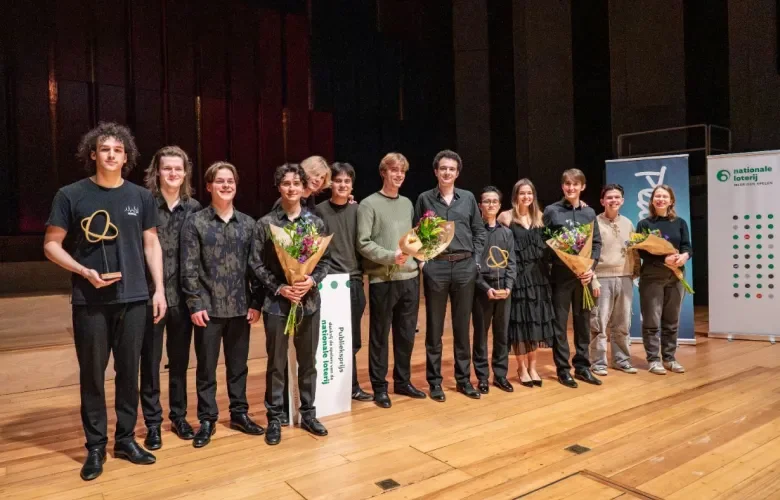
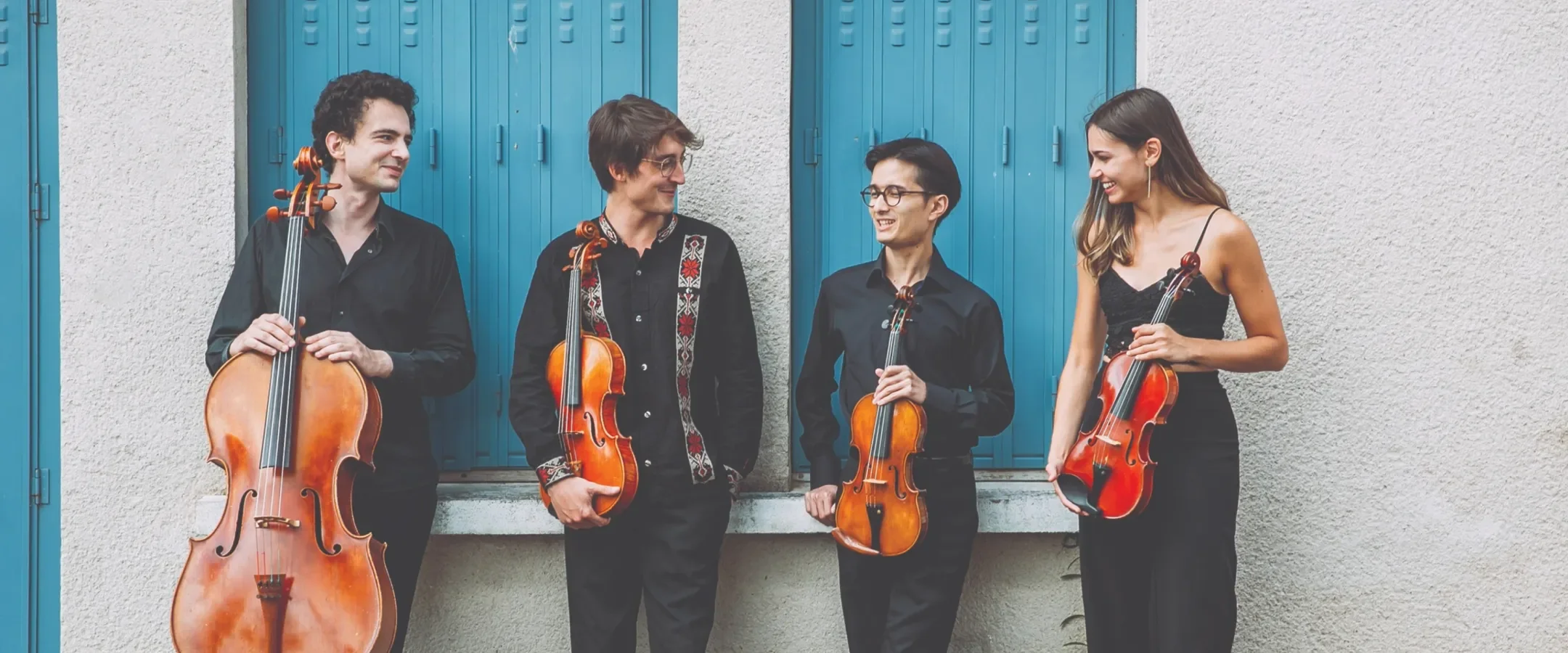
The winners of Supernova 2026 have been announced: Naka Quartet and Effel Quartet. As brand-new laureates of this twelfth edition of the competition for young chamber music ensembles, they are eager to showcase themselves to the public. During Klarafestival 2026, on Saturday 21 March, you can hear both quartets playing live at the Musical Instruments Museum. This concert is part of the prize package and is also the jumping off point for their Belgian concert tour. In the run-up to the festival, we spoke to both ensembles about their trajectories, their musical choices, and how they shape their own voice within chamber music.
What does it mean to you to win this prize?
Effel Quartet: It was a tremendous relief to note that all that hard work has paid off. What made it extra special is that for the final, we were able to perform a work that our tutor Vincent David composed especially for us.
Naka Quartet: We too are absolutely delighted to see that all our efforts have borne fruit. This spurs us on to work even harder. This is our first joint victory as a quartet, and we are eager to build upon it.
How do you now look back on your participation in the competition?
EQ: It was the first time that we truly brainstormed about how we can combine music with a different art form. We wanted to prove that a chamber music concert is anything but formal: you don’t have to sit still for 45 minutes and listen attentively to the musicians. We consciously took an innovative approach to structuring our programme, by building bridges to poetry and painting. For the four of us, this was an exceptionally interesting and instructive process.
NQ: Supernova was not the first competition in which we took part, but it was the largest to date. It was an intense process, but we look back on it with great satisfaction. We were wonderfully well supported by the Klarafestival team, from the semi-final at Flagey to the final at DE SINGEL. We had never performed in a venue of that size or with such excellent acoustics. Fortunately, during the soundcheck, we were able to figure out what worked and what didn’t. The feedback from the jury members was hugely instructive and motivating for us.
On 21 March you will be kicking off your Belgian concert tour at Klarafestival. What can we expect?
NQ: We want to stimulate the audience without shocking them. We are reprising the works of Felix Mendelssohn and Wim Henderickx that we performed during the final. This illustrates what our ensemble is all about: bringing contemporary music and works that are rarely performed into dialogue with classical masterpieces like those of Mendelssohn.
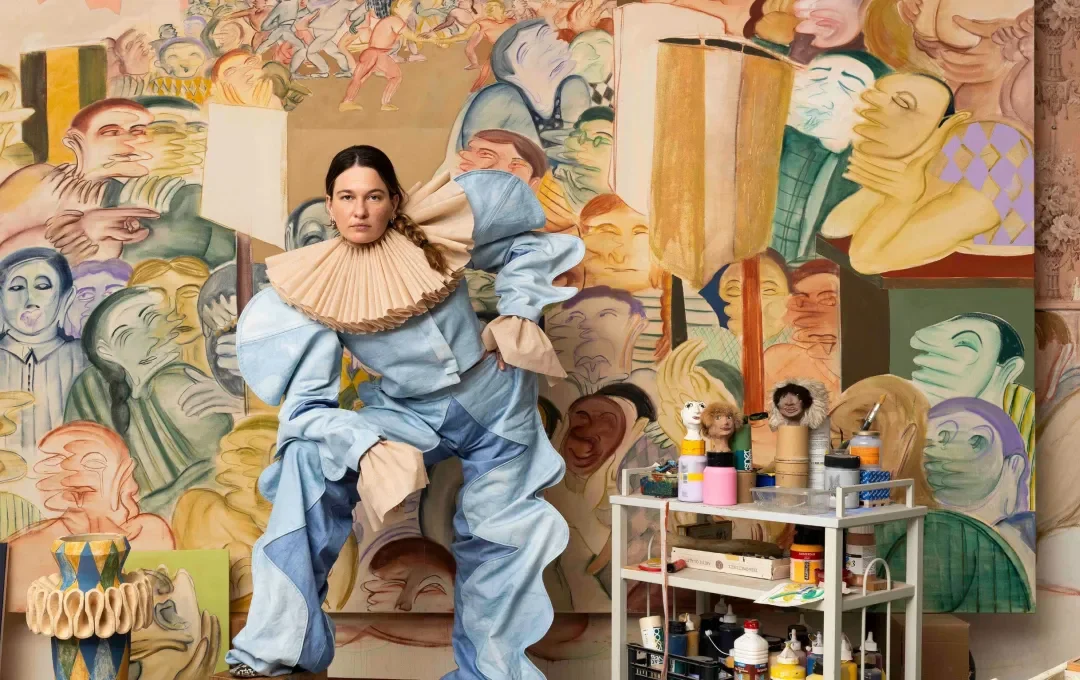
EQ: We too will be reprising a work from the final: Debussy’s Suite Bergamasque is a work that is always well received by the audience. And we haven’t stood still. For the festival concert, we’ll be collaborating for the first time with visual artist Julia Renaudot. We are very curious about the result and the audience’s reaction. Alongside that, we will be performing the movements Maurice and Béla from Images, the work that Vincent David composed for us.
Are there certain pieces or composers who have a fixed place in your repertoire?
EQ: Debussy has a special significance for us. His Suite Bergamasque was the first major work that we played together. We also recorded it and so it felt natural for us to keep on performing it. Alongside that, we try to create a clear line and a story in every programme.
NQ: That coherence is important to us too. We feel very drawn to contemporary music, and especially to that of Belgian composers. All four of us are huge admirers of Wim Henderickx’s work. The work by him that we are performing, In Deep Silence III. Impression on a Theme from Haydn. String Quartet No. 2 is inspired by Oriental music. It creates a calm moment for reflection.
EQ: We recognise the quest for a balance between old and new: Debussy, with pieces including Clair de Lune, which is familiar to many, contrasts beautifully with the energetic Ciudades of Guillermo Lago.
Do you have other ongoing projects alongside the concert series in Belgium?
EQ: It is a busy time for us. We’re currently preparing for a festival in Andorra. There we’ll be performing the world premiere of Images alongside two completely new pieces in our repertoire. And alongside this, there are a whole series of concerts planned in June, August and September.
NQ: We are also performing outside Belgium. We have a concert coming up soon in Metz, at l’Arsenal, where we’ll be performing work by the Chinese-American composer Zihan Wu for the first time. Our quartet is also the ensemble in residence at Chamber Music for Europe, an organisation that promotes chamber music in Wallonia and Brussels. During our residencies, there are various concerts planned across a whole season, including festivals in Italy and France.
And if you take a moment to dream: where do you see yourself as an ensemble in five years’ time?
NQ: Our wildest dreams? To be rich and living in Los Angeles. (laughs) We hope to be able to expand our network in each of our home countries: Belgium, France, Italy and Japan. And alongside that, we want to join forces with composers, visual artists and scenographers, to experiment with all the possibilities that such a collaboration can open up.
EQ: Our core goal is to place the saxophone in a fresh light and to show what surprising and extensive sound possibilities the instrument offers, also in quartet formation. By collaborating more with composers, we want to harness our quartet as a medium for creating new formats.
How do you deal with competition and stress?
EQ: When you perform solo, you are up on stage alone and have to fall back on yourself. When you are performing chamber music, things feel far more relaxing. What’s more, in recent years we have been able to perform together a lot, which means that we’ve grown familiar with being on stage. Thorough preparation and mutual trust help the stress fade away. What is then left is a healthy amount of tension and above all: a huge amount of enthusiasm.
NQ: Some people are better at coping with stress than others, and it’s great that we understand one another in this respect. But at the same time, we are open to strengthening our connection with one another. This gives us a sense of reassurance. We feel good together and that means that we’re full of confidence when we are on stage together.
What advice would you like to give to future candidates?
EQ: In the first instance, ensure that the music is front and centre. Focus on quality, have conviction in what you do, and make something that is truly meaningful to you, and which you fully stand behind as an ensemble. If you are sincere, then you will be heard. Supernova is about much more than just first, second or third place.
NQ: Your personality as an ensemble also plays a role. Ask yourself the following questions: ‘What is our identity? What do we want to showcase?’ Take care to seek out a repertoire that fits with your identity. Do not choose too quickly and dare to doubt. And finally: don’t overthink things in the moment itself. Above all, try to enjoy the experience, as your energy will naturally resonate with the audience and the jury.
Interview by Fauve Charlier